


Why Eczema Gets Worse in Winter
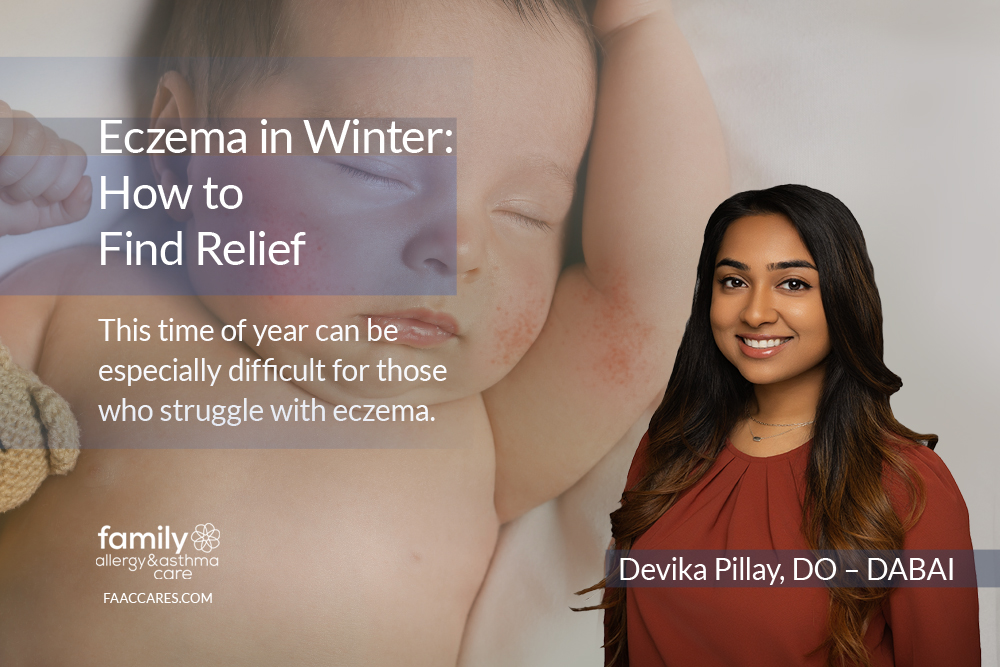
Winter and the dry, cold air that comes with it tend to worsen many people’s eczema. That’s why this time of year can be especially difficult for those who struggle with this condition. The cold air has a drying effect, causing our skin to lose moisture, which then leads to increased itching and the onset of a rash.
HOW CAN I FIND RELIEF FROM ECZEMA?
So, what can you do to get your skin some relief this winter? Moisturization is key! It is very important to soothe the skin barrier, and the best way to do that is by keeping the skin hydrated. Although we all love to smell nice, fragrance can be irritating to our skin, especially skin with eczema.
Be sure to look for fragrance-free moisturizers. The stamp of approval from the National Eczema Association can be a helpful marker when choosing a product. Thicker products, such as ointments and cream-based moisturizers, are more hydrating for the skin than lotions. Trying to moisturize at least once per day is a great start, although many people will need to moisturize multiple times per day during this time of year to keep their skin feeling hydrated.
AVOIDING ECZEMA TRIGGERS
-
Allergens like pets, pollen, and dust mites
-
Certain foods
-
Rough clothing fabric like wool or polyester
-
Wool or heavy fabrics worn close to the skin
-
Chemicals- these can hide in our personal care products
These factors can make eczema symptoms flare more frequently and feel harder to control.
Finding an allergist you trust is a huge part of creating and maintaining an eczema skin care routine that best fits your needs! Here at FAAC, we are committed to partnering with you to help you feel and look your best, not only through the winter season but every day!